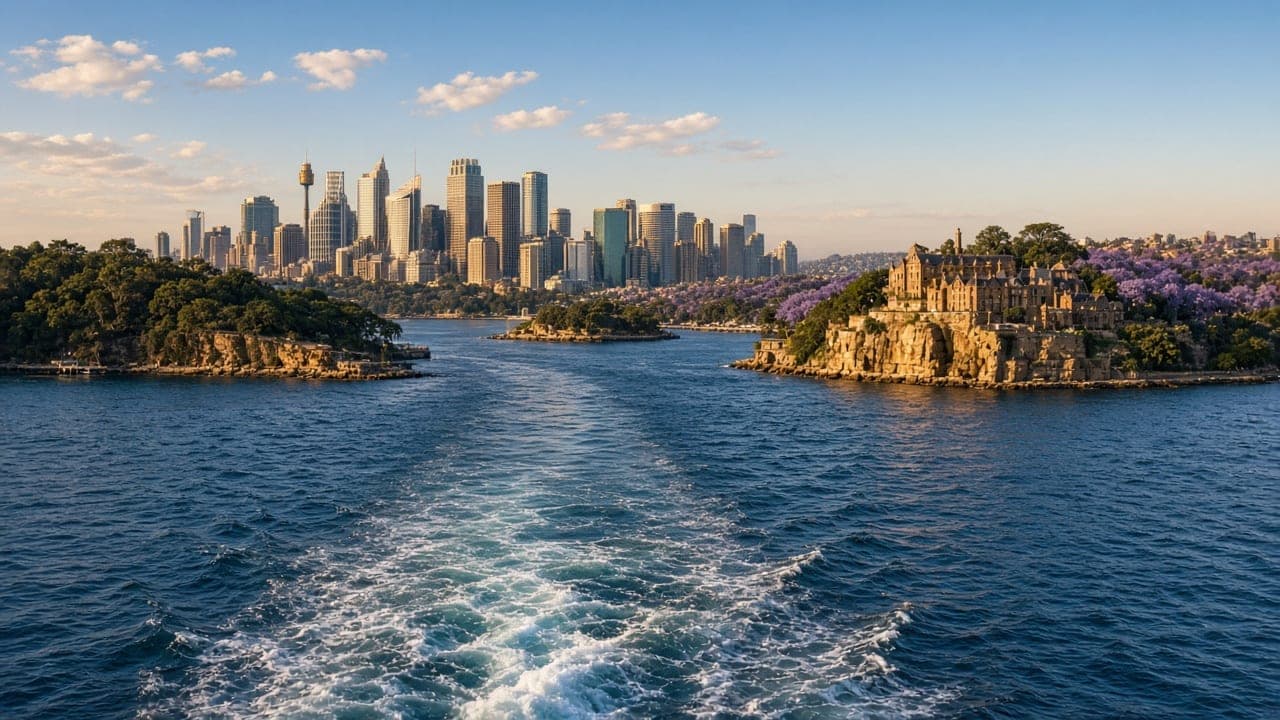
Late autumn and early spring are the most forgiving windows if you want to walk, ride ferries and swim without collecting a crowd as a souvenir. March to May often holds warm water and clearer, less humid air than January. September to November is windier, with the city coming out of the football codes and into blossom and glare. December to February is hot, humid and busy at every harbour edge. June to August is the sharpest air, the shortest days, and the reason a sport-lover should stop calling winter “off-season”.
There is no month in which Sydney is closed. There are months that fight a beach fantasy, and months that fight a stadium fantasy. Choose the fantasy first.
What “best” cannot mean
Best cannot mean a ranking of months as if the city were a product. Best, here, means the month that matches the days you will actually have: ferry plus ocean pool, or night football plus museum, or a family apartment week that can absorb a southerly. A January week can be glorious if you like heat and start early. A July week can be the point of the trip if you came for rectangular sport and sandstone in low light.
School holidays overlay all of this. Domestic visitors move when children are free. If you can slide seven days off those windows, ferries and ocean pools feel different without the climate changing.
Summer, in useful detail
Sydney summer is humid subtropical weather at Observatory Hill: warm nights, UV that does not care about your latitude assumptions, and afternoon storms that can be theatrical and brief. Ocean beaches are the postcard; harbour beaches and tidal pools are often the more practical swim when wind is up. Start walks at first light. Keep an indoor hour. Drink water like an adult.
Bushfire smoke is a seasonal risk in some summers, not a personality trait of the city. When it happens, the Bureau and health advice beat any itinerary. We will not pretend otherwise.
Autumn
March, April and May are the months many locals would quietly keep. Humidity eases. Evenings lengthen the other way but remain usable. Swimming continues for people who did not pack only tropical clothing. This is the walking city: headlands, cemeteries, inner-west streets, ferry loops that do not feel like endurance.
Easter and Anzac dates, when they fall, change crowd patterns. Look at the calendar; do not look for us to invent an events list.
Winter
Winter is not a closed beach so much as a different water. Ocean pools extend the ritual. The harbour is at its most photogenic in cold, clear air. Rugby league and rugby union occupy the vernacular. Australian football has its Sydney footprint. Night fixtures will eat your evening; plan the afternoon accordingly.
Pack a layer. The city can be 18 degrees and sunny and still steal heat on a ferry. Indoor culture — galleries, libraries, the kind of café that is actually a room — is not a consolation prize. It is winter Sydney.
Spring
Wind is the plot. Windscreens, hats, and harbour chops that surprise people who packed only linen. Jacaranda streets photograph well and clog a few inner neighbourhoods with visitors who came only for the colour. Swimming returns for more people. Sport calendars overlap as codes finish.
If you have one Sydney week in your life and you want a bit of everything, late spring or late autumn is the compromise. Compromises are allowed. They are just not “best of”.
Microclimates
Western suburbs run hotter in summer. Peninsula and northern beaches run windier. The harbour can feel milder than the ocean at the same hour. Check a forecast for the suburb you will actually stand in. Observatory Hill is a useful official series, not a magic number for Bondi at dawn.
Pairing the month with a stay
Summer likes apartments with airflow and a kitchen. Winter likes a base near rail or a stadium. Ferry-heavy weeks like a wharf. Do not rent a car for a harbour week unless you have a hinterland day that earns it. See the stays hub for comparison logic, not for a building name.
What to do if the dates are already locked
If work or family locked January, you still have dawn, pools, and the option to leave the city for a less humid escarpment day. If they locked July, you still have sport, sandstone and the sharpest skyline. Locked dates are not a failed trip. They are a climate you now plan for.
Confirm with BOM. Confirm park fire or storm alerts if you leave the basin. Then go.
How this guide should be used
Read it as a planning argument about Sydney, not as a booking script. The useful output is a season, a radius and a mistake you will now refuse. If you need a ticket, an operator or a park alert, leave this page and deal with the people who actually run the place.
When is the best time to go to Sydney? sits in a rebuilt heritage URL so an old dated path can 301 here in one hop. Nothing on this page was copied from the archive body. Public climate, public maps and public land managers do the factual work. We write the joining sentences.
Idle time still matters. A day with unscheduled weather will teach you more about Sydney than a day with three paid stops and a motorway between them. Eat where the town eats. Sleep near the thing you will repeat. Check the forecast the night before an exposed walk.
Distance, humidity, wind and school holidays will shape a week in Sydney more than a slogan will. Confirm the town on a Bureau of Meteorology page and the land on a map. A week with one empty afternoon will remember the landscape; a week with nine paid attractions will remember the queue.
We will not invent prices, operator rankings, events or quotes. Historical business names from earlier versions of TravelAus, if they appear in your memory of this slug, are unverified listings. Trademarks belong to their owners. This journal is independently operated.
If a sentence here drifts from a Bureau of Meteorology summary, a park alert or a map, send a source via the contact page. Corrections beat nostalgia. Independence here means we are not a tourism board, a park agency, an airline or a booking desk.
How this guide should be used
Read it as a planning argument about Sydney, not as a booking script. The useful output is a season, a radius and a mistake you will now refuse. If you need a ticket, an operator or a park alert, leave this page and deal with the people who actually run the place.
When is the best time to go to Sydney? sits in a rebuilt heritage URL so an old dated path can 301 here in one hop. Nothing on this page was copied from the archive body. Public climate, public maps and public land managers do the factual work. We write the joining sentences.
Idle time still matters. A day with unscheduled weather will teach you more about Sydney than a day with three paid stops and a motorway between them. Eat where the town eats. Sleep near the thing you will repeat. Check the forecast the night before an exposed walk.
Distance, humidity, wind and school holidays will shape a week in Sydney more than a slogan will. Confirm the town on a Bureau of Meteorology page and the land on a map. A week with one empty afternoon will remember the landscape; a week with nine paid attractions will remember the queue.
We will not invent prices, operator rankings, events or quotes. Historical business names from earlier versions of TravelAus, if they appear in your memory of this slug, are unverified listings. Trademarks belong to their owners. This journal is independently operated.
If a sentence here drifts from a Bureau of Meteorology summary, a park alert or a map, send a source via the contact page. Corrections beat nostalgia. Independence here means we are not a tourism board, a park agency, an airline or a booking desk.
How this guide should be used
Read it as a planning argument about Sydney, not as a booking script. The useful output is a season, a radius and a mistake you will now refuse. If you need a ticket, an operator or a park alert, leave this page and deal with the people who actually run the place.
When is the best time to go to Sydney? sits in a rebuilt heritage URL so an old dated path can 301 here in one hop. Nothing on this page was copied from the archive body. Public climate, public maps and public land managers do the factual work. We write the joining sentences.
Idle time still matters. A day with unscheduled weather will teach you more about Sydney than a day with three paid stops and a motorway between them. Eat where the town eats. Sleep near the thing you will repeat. Check the forecast the night before an exposed walk.
Distance, humidity, wind and school holidays will shape a week in Sydney more than a slogan will. Confirm the town on a Bureau of Meteorology page and the land on a map. A week with one empty afternoon will remember the landscape; a week with nine paid attractions will remember the queue.
We will not invent prices, operator rankings, events or quotes. Historical business names from earlier versions of TravelAus, if they appear in your memory of this slug, are unverified listings. Trademarks belong to their owners. This journal is independently operated.
If a sentence here drifts from a Bureau of Meteorology summary, a park alert or a map, send a source via the contact page. Corrections beat nostalgia. Independence here means we are not a tourism board, a park agency, an airline or a booking desk.